
Healing after abuse is one of the most difficult journeys a person can face, because it does not just harm the body, it deeply wounds the heart, soul, mind, and sense of identity. Abuse tears at the very core of who you are. It damages your trust, distorts your perception of love, and often leaves you questioning your own worth.
Continue readingIs it okay to say (YHWH) Yahweh? What about the name of Jesus?
Is it okay to say (YHWH) Yahweh? What about the name of Jesus? Is it okay to say Yahweh? or Jehovah? Is it offensive to God if we pronounce it wrong? What about the name of Jesus? Many insist that Jesus must be called Yeshua, or even Yashua, Yahua, and all kinds of other interpretations, claiming them all correct, but rejecting the name ‘Jesus’. To find the answer, we must turn to what the Bible says, and what we do know.
Continue readingLove God with all the heart
Love God with all your heart, with all the understanding, with all the soul, and with all the strength. What does this all mean?
Mark 12:32-33 (NKJV)
32. So the scribe said to Him, “Well said, Teacher. You have spoken the truth, for there is one God, and there is no other but He. 33. And to love Him with all the heart, with all the understanding, with all the soul, and with all the strength, and to love one’s neighbor as oneself, is more than all the whole burnt offerings and sacrifices.”
Loving God “with all the heart, with all the understanding, with all the soul, and with all the strength” is a foundational command found in the Scriptures. It calls for a deep, comprehensive devotion that involves every aspect of our being. Here’s a breakdown of what this means in practical terms and how it can transform our daily lives.

1. Love God with All the Heart
To love God with all your heart is to engage your emotions in your relationship with Him. This is not about fleeting feelings or superficial displays of faith; it is about an intense, persistent commitment that influences your desires and preferences. Your heart, in this sense, directs your emotional energy towards seeking and maintaining a close relationship with God. It means choosing to prioritize God’s will over personal desires, finding joy in His presence, and maintaining a spirit of gratitude for His mercy and love.
2. With All the Understanding
Using all your understanding to love God means employing your intellect in your faith. This involves studying the Bible, seeking deeper knowledge of God’s character, and understanding His plans for your life. It is not enough to simply feel affection for God. You must also comprehend the doctrines and teachings that define your faith. This knowledge should then guide your decisions and behaviors, helping you to live a life that reflects your beliefs and values.
3. With All the Soul
Your soul represents your true self, the core of who you are. To love God with all your soul means that your identity is anchored in your relationship with Him. This part of the command calls for an integration of your faith into every facet of your life. It is about allowing your spiritual life to extend into your daily actions, interactions, and thoughts. Whether you are at work, with family, or alone, your life should be a reflection of your commitment to God.
4. With All the Strength
Finally, loving God with all your strength focuses on living your faith through actions. It is about dedicating your resources (time, talents, and treasure) to serve God and His purposes. This could be volunteering in community service, supporting mission work. But it simply and importantly is being a kind and honest person in your everyday interactions. It means actively seeking ways to demonstrate God’s love through acts of kindness, justice, and mercy.
Applying this in daily life
How can we put this comprehensive type of love into action? Here are a few tips:
- Start your day with prayer: Ask God to fill your heart, guide your thoughts, strengthen your soul, and empower your actions throughout the day.
- Study the Bible regularly: Make it a habit to read and meditate on the Scriptures to deepen your understanding and connection with God.
- Reflect your faith in everyday actions: Let your faith shine through how you treat others, how you work, and how you speak.
- Serve others: Look for opportunities to use your abilities and resources for the benefit of others and the glory of God.
When you strive to love God with all your heart, understanding, soul, and strength, you are not just obeying a biblical command, you deepen your relationship with God. This transforms your life. This holistic approach to faith ensures that your love for God is not just a part of your life; it becomes your life.
Call on the name of the Lord.
Everyone who calls on the name of the Lord will be saved. But what does this mean?
Romans 10:13 “For whoever calls on the name of the Lord shall be saved.” But what does this mean to call on the name of the Lord? It is much more than just calling out His Name. It has consequences, both good and bad.
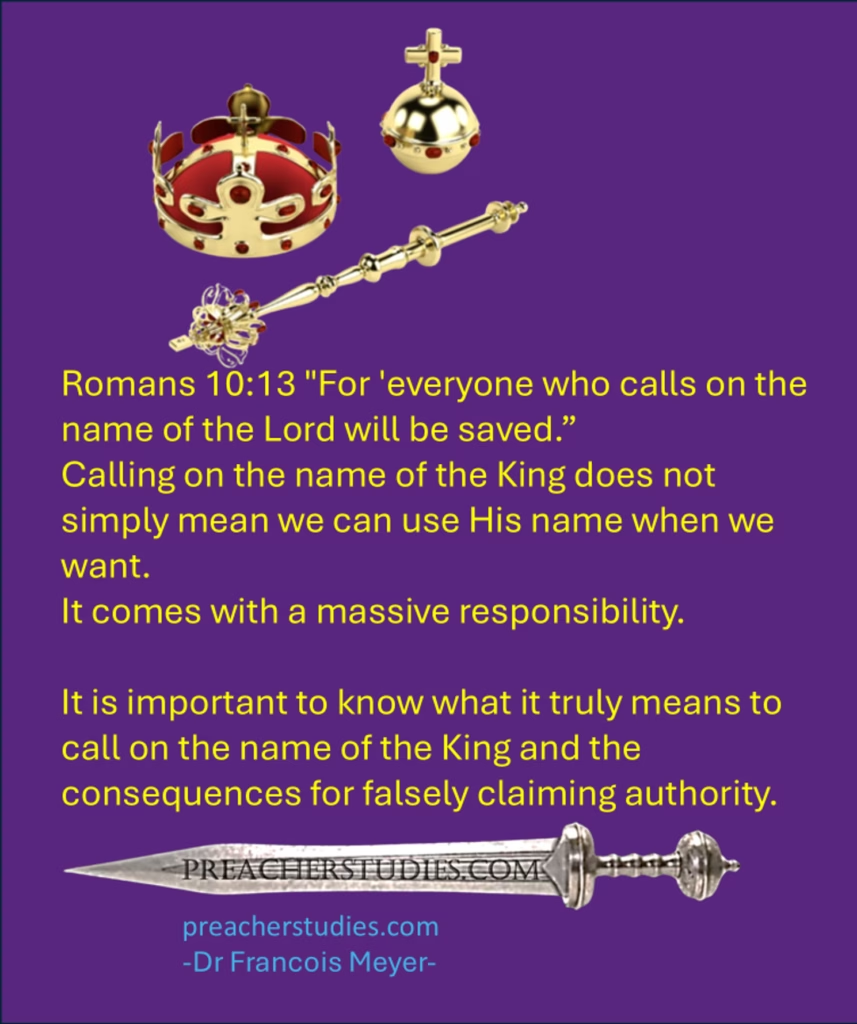
Romans 10:13 “For ‘everyone who calls on the name of the Lord will be saved.'” This verse summarizes the authority and the sincere, faith-driven use of the name of Jesus to authorize your message or action of Jesus’ name as essential for salvation.
When you call on the name of the Lord, you claim Jesus’ backing or endorsement for what you are doing. This emphasizes that you do not simply mention Jesus’ name, but declare that your message and actions are supported by and aligned with Jesus’ authority and teachings.
There is a massive responsibility, consequence and seriousness associated with acting under Jesus’ name.
Such action has major implications. It is a huge ethical and spiritual responsibility to ensure that any actions taken or words spoken in His name truly align with His teachings and the principles of Christianity. There are significant consequences, both positive and potentially negative, depending on the sincerity and correctness of the actions associated with His name.
It requires authenticity and integrity, and ensures that your message and actions genuinely reflect Biblical principles and are truly according to what Jesus taught and stood for. This reminds us that such claims of authority must be backed by a real and faithful adherence to the teachings of Jesus, not just used as a label or for personal gain.
You must call on the name of the Lord in genuine belief and commitment to His lordship, much like invoking a king’s name with loyalty and a commitment to abide by his decrees, and the severe implications of using a king’s name without authority or loyalty.
Using the name of Jesus is extremely important and powerful, and comes with the expectation of a true relationship and adherence to His teachings.
In history, invoking (calling on/ using) the name of a king was a declaration of authority granted by the king himself, as well as a solemn commitment to obey his laws and demonstrate unwavering loyalty.
Authority and Obedience
Using the king’s name typically indicated that an individual was acting under the authority directly granted by the king. This authority might involve executing laws, governing on behalf of the monarchy, or other official duties. The invocation of the king’s name was a public affirmation that their actions were conducted under the king’s sanction and permission, and that they obeyed and acted according to the sovereign powers vested in them.
The privilege of calling upon the king’s name could only be done in a strict loyalty and obedience to the king’s laws. Those entrusted with this right were expected to live and act according to the king’s commands, laws, and instructions. Deliberate failure to comply with these standards could lead to the revocation of this privilege and was seen as a betrayal of the trust placed by the king.
Misuse, Consequences, and Forgiveness of calling on the name of the Lord
If any person used the king’s name without explicit permission, or for purposes not sanctioned by the king, it was considered a severe violation. Such acts were often viewed as violation of royal authority and could be classified as treason, typically punishable by the most severe penalties, including death.
However, if disobedience or misuse of the king’s name was accidental or due to incompetence or lack of knowledge rather than intentional deceit or rebellion, the king might choose to forgive the offender. If the individual sought forgiveness and demonstrated genuine repentance, committing to rectify their mistake and adhere more closely to the royal laws, the king could grant a pardon. This act of mercy would pardon and release the individual from the death penalty, reinstating their status, and possibly their privileges under the king’s rule.
Spiritual Importance of calling on the name of the Lord
In a spiritual context, invoking the name of Jesus Christ carries significant authority along with the responsibility to live according to His teachings:
Authority to call on the name of the Lord
The Bible teaches us that Jesus empowers His followers to act in His name. This includes prayers, healing, and evangelical efforts. However, this authority is conditional upon their faithfulness to His teachings and their moral conduct.
Repentance and Divine Forgiveness
The Bible strongly emphasis repentance and forgiveness. If a believer unintentionally fails to live up to Christ’s teachings and calls upon His name inappropriately, they can seek forgiveness through prayer. Genuine repentance means acknowledging the wrongdoing, seeking God’s forgiveness, and making a sincere effort to change. Divine forgiveness, much like a king’s pardon, restores the believer’s relationship with God and reaffirms their authority to call upon Jesus’ name.
Matthew 7:21-23: “Not everyone who says to Me, ‘Lord, Lord,’ shall enter the kingdom of heaven, but he who does the will of My Father in heaven. Many will say to Me in that day, ‘Lord, Lord, have we not prophesied in Your name, cast out demons in Your name, and done many wonders in Your name?’ And then I will declare to them, ‘I never knew you; depart from Me, you who practice lawlessness!’
This highlights the serious consequences of using Jesus’ name without truly knowing Him or following His will.
1 John 1:9: “If we confess our sins, He is faithful and just to forgive us our sins and to cleanse us from all unrighteousness.”
This promises forgiveness for those who sincerely confess and repent of their sins.
Acts 3:19: “Repent therefore and be converted, that your sins may be blotted out, so that times of refreshing may come from the presence of the Lord,”
This scripture encourages repentance and promises not only forgiveness but also renewal as a result.
Call on the name of the Lord and you will be saved
The privilege of using Jesus’ name is not just a matter of honor but a responsibility that requires obedience to a set of laws and principles. Misuse of this privilege can lead to severe consequences, but there is also room for mercy and forgiveness, depending on the sincerity of the individual’s repentance and their commitment to righting their wrongs. This points out the importance of loyalty, responsibility, and the transformative power of forgiveness in the maintenance of authority and order.
Learn more truth about the spiritual meaning of God’s eternal law here
Must Christians still observe the Sabbath?
Must Christians still observe the Sabbath? Is it Saturday or Sunday? If the Law is spiritual, how does it affect us today? Many believers ask this question today. Many argue that the day changed from Saturday to Sunday when Jesus rose from the grave, while others hold on to the Saturday (6th day). But is the physical calendar day relevant at all? What are we missing?
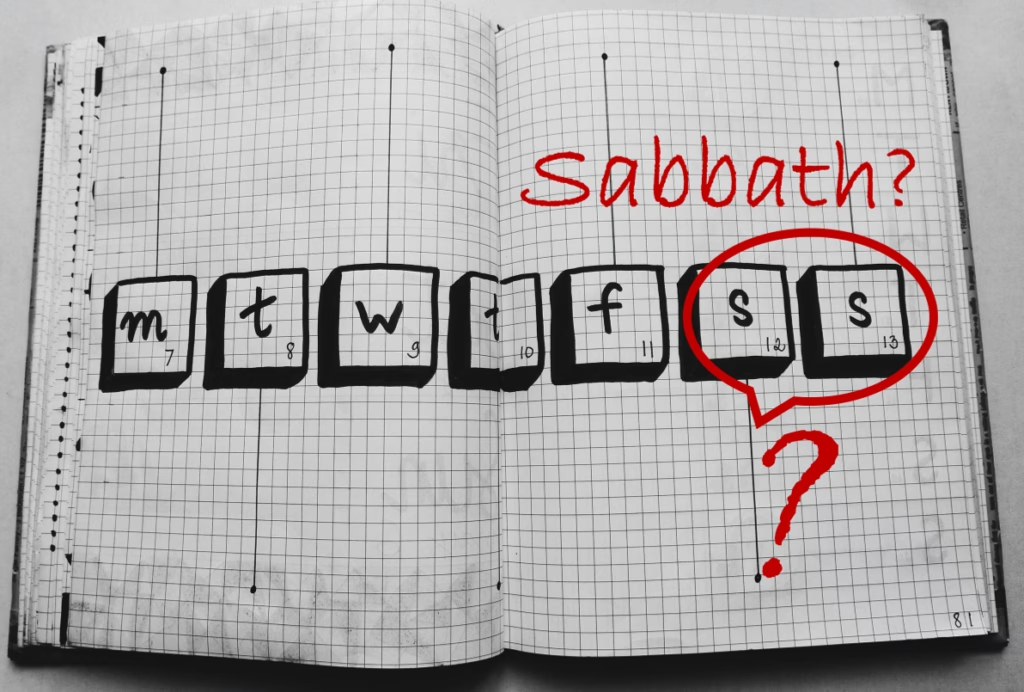
The Spiritual Meaning of the Sabbath: Rest and Peace in Jesus
The Old Testament Sabbath, as explained in Hebrews 4, goes beyond physical rest and points to the spiritual rest believers find in Christ through faith. This rest is about trusting in God’s provision and ceasing from self-reliance or works-based efforts to earn righteousness. Instead, it calls us to rely fully on the finished work of Jesus. Hebrews describes this rest as both a present reality—experienced through peace and fellowship with God—and a future promise of eternal rest in His presence. The Israelites’ failure to enter the Promised Land, due to unbelief and disobedience, serves as a warning for believers today to remain faithful and obedient, striving to live according to God’s Word and enter His rest.
“I am the Master of the Sabbath”
When Jesus declared, “I am the Master of the Sabbath” (Matthew 12:8), He affirmed His authority to fulfill the Sabbath’s ultimate purpose. The Sabbath always intended to direct humanity toward God’s eternal rest, and Jesus, as its fulfillment, offers the true and lasting peace the Sabbath foreshadowed. For New Testament believers, the Sabbath symbolizes a consistent rest and peace found in Jesus, rather than the observance of a specific day, such as the seventh day. By trusting in Christ, we enter into the spiritual Sabbath, resting from striving and finding our complete satisfaction in Him.
The Sabbath is an ongoing call to faith, obedience, and surrender. It is not tied to a day but to a daily relationship with Jesus.
Must Christians still observe the Sabbath?
The Sabbath, therefore, is not about setting aside one day a week but about embracing a perpetual spiritual reality. It transcends the boundaries of time, offering believers rest in Jesus every day. True rest does not come from observing rituals, but from walking closely with Christ, the Master of the Sabbath, who brings us peace both now and forever.
Sabbath defined
Must Christians still observe the Sabbath? Hebrews 4 redefines the Sabbath. It is a spiritual rest found in Jesus rather than a specific day of the week. Jesus declared, “I am the Lord of the Sabbath” (Matthew 12:8). He shifted the focus away from strict, legalistic observance and toward the deeper purpose of the Sabbath. This purpose is resting in Him through faith. The Sabbath always pointed to a greater reality: the peace and rest believers find in Christ’s finished work. Jesus Christ fulfills The Sabbath, and allows believers to experience it as a consistent, daily spiritual reality rather than confining it to the observance of a particular day.
The purpose of the Sabbath
The purpose of the Sabbath is to honor God and find rest in Him. It is fulfilled through a relationship with Christ. Therefore, it is not binding to observe the seventh day (Saturday) or any specific day.
Colossians 2:16-17 further supports this, stating: “Therefore do not let anyone judge you by what you eat or drink, or with regard to a religious festival, a New Moon celebration, or a Sabbath day. These are a shadow of the things that were to come; the reality, however, is found in Christ.”
Want to understand the Bible better? Read the Bible in chronological order, and get a certificate upon completion! Or enroll for a course.
The spirit and power of Elijah – is it John the Baptist?
What does Malachi’s Prophecy, “The Coming of Elijah ” mean? Is it John the Baptist the spirit and power of Elijah?
The prophecy in the Book of Malachi about “the coming of Elijah” has interested readers for centuries, especially with its fulfillment in the New Testament. This phrase refers to Malachi’s prediction of a prophet who would come in the spirit of Elijah to prepare the way for the Lord. The New Testament identifies John the Baptist as the one who fulfills this prophetic role.
What does this mean? And how does it connect Elijah and John the Baptist in biblical history?
Malachi’s Prophecy of Elijah
Malachi’s writings, around 430 BCE during or after Nehemiah’s reforms, warned of spiritual apathy and improper worship in Judah.
In his closing prophecy (Malachi 4:5–6), he wrote:
“Behold, I will send you Elijah the prophet before the great and awesome day of the LORD comes. And he will turn the hearts of fathers to their children and the hearts of children to their fathers, lest I come and strike the land with a decree of utter destruction.” (ESV)

What is the prophecy, ‘the spirit and power of Elijah (John the Baptist) about?
The coming of a prophet like Elijah: one who would display Elijah’s boldness and spiritual authority.
A mission of reconciliation and repentance: calling people to return to God and to restore broken relationships.
Preparation for the Lord’s coming: ensuring hearts were ready to receive the Messiah.
John the Baptist as the Fulfillment
The New Testament specifically links John the Baptist to Malachi’s prophecy:
Jesus confirmed: In Matthew 11:14, Jesus said, “And if you are willing to accept it, he is the Elijah who was to come.”
The Angel Gabriel’s message:
When he announced John’s birth, Gabriel told Zechariah, “He will go on before the Lord, in the spirit and power of Elijah, to turn the hearts of the parents to their children and the disobedient to the wisdom of the righteous, to make ready a people prepared for the Lord” (Luke 1:17).
John’s ministry, known by his powerful preaching and call to repentance, repeated Elijah’s fiery confrontation of sin and idolatry in the Old Testament. When John baptized people and urged them to prepare for Jesus’ arrival, John fulfilled the role of Elijah as a forerunner to Christ.
Why Elijah?
Elijah was a major prophetic figure in the Old Testament, known for his boldness and unshakable commitment to God. He challenged idolatry, confronted powerful leaders like King Ahab, and called Israel to repentance (1 Kings 17–2 Kings 2).
Comparing Elijah to John
Elijah’s mission: To turn Israel back to God during spiritual decline.
John’s mission: To prepare hearts for the coming of the Messiah by calling people to repentance and spiritual renewal.
John the Baptist was not a reincarnation of Elijah, but he came “in the spirit and power of Elijah,” fulfilling Malachi’s prophecy as the one who would prepare the way for Jesus.
In the spirit and power of Elijah
When Malachi foretells “the coming of Elijah,” he predicts a prophet like Elijah who would prepare the way for the Lord, a prophecy fulfilled in John the Baptist. John’s mission was to call people to repentance and readiness for the arrival of Jesus Christ, the Messiah, reflecting Elijah’s fiery zeal and unwavering commitment to God’s purpose. Operating “in the spirit and power of Elijah,” John carried out a ministry marked by boldness, spiritual authority, and a call to turn hearts back to God.
John the Baptist, the spirit and power of Elijah
John is not Elijah reincarnated, but John had the same prophetic zeal and impact as Elijah, bridging the Old Testament prophecy with its New Testament fulfillment.
When we understand this connection, we see the seamless fulfillment of God’s plan through prophecy, reaffirming His sovereignty and the unchanging message of repentance and redemption.
Is Jesus the Way, the Truth, and the Life? And what does it mean? Read more here…
Do you want to learn more about the Bible and understand it better?
If so, read more here, and enroll in a course.
Can Christians celebrate Christmas on 25 December?
Can Christians celebrate Christmas? This is a debate that has been pestering Christians for years.
The short answer? Yes.
Here is why…
First, we must know the importance of purity in worship and resisting Satan’s attempts to infiltrate and distort the faith.
The issue is not whether Christians can celebrate Jesus’ birth but how they should do so in a way that honors God and aligns with biblical principles. Celebration is not condemned; in fact, the Bible is filled with examples of rejoicing in God’s works:
Luke 2:10-14: The angels rejoiced at Jesus’ birth, proclaiming peace and goodwill.
Philippians 4:4: “Rejoice in the Lord always; again I will say, rejoice.”
Scriptural Warning
However, Scripture also warns against mixing true worship with elements rooted in falsehood or idolatry:
Deuteronomy 12:30-31: “Take care that you be not ensnared to follow them… You shall not worship the LORD your God in that way.”
2 Corinthians 6:14-15: “What partnership has righteousness with lawlessness? Or what fellowship has light with darkness? What accord has Christ with Belial?”
We must understand (and the fact is greatly ignored or dismissed in churches) that Satan has indeed infiltrated the churches. He attacks believers in Christ in two ways;
1. Dismissing the truth by convincing some that it is illegal to celebrate it (telling us about the worship of false gods like Sol Invictus and the feast of Saturnalia. Yes, this is true, but it is how we celebrate Jesus on this day that matters.
If Christmas celebrations are genuinely focused on Jesus Christ, honoring His birth and reflecting His teachings without incorporating pagan rituals and symbols, it effectively replaces Saturnalia and any other pagan celebrations. Such a Christ-centered celebration would redeem the date from its historical associations and turn it into a time to glorify God
2. Twisting the truth and mixing the earthly pagan worship rituals into the celebration, like the tree, mistletoe, yule log, santa claus, etc.
He wants to divide the Christians, and has been doing that since the beginning (example: all the various denominations). This way, he spreads discrimination, feelings of superiority, entitlement, and hatred among God’s people.
And THIS is exactly how he manages to damage our relationship with God. So, yes, it is true that Saturnalia was also celebrated on 25 December.
So, can we celebrate the birth of Christ on 25 December?
Yes.
Can we have a tree, yule log, mistletoe, etc.? No.
Because that is mixing the honouring of God with pagan rituals.
The main question becomes:
Does the way we celebrate Jesus’ birth reflect worship in spirit and truth?
The Torah is clear about the Holy Days instructed by God, but Jesus was not born on any of those days. Did God approve other days on which the Israelites celebrated God on a day that they decided? Yes.
Esther 9:22 KJV: “As the days wherein the Jews rested from their enemies, and the month which was turned unto them from sorrow to joy, and from mourning into a good day: that they should make them days of feasting and joy, and of sending portions one to another, and gifts to the poor.”
The gifts were not about wealth or extravagance but were portions of food shared out of love and gratitude, showing that celebration should not be about materialism but about community and generosity.
Satan’s strategy of division among Christians has been effective throughout history. The emergence of various denominations and disagreements over doctrines often leads to feelings of Superiority and Entitlement. Believers may judge others based on how they celebrate or whether they choose to celebrate at all.
Hatred and Discrimination within the body of Christ.
Hatred and Discrimination due to differences in practice can lead to unnecessary conflict within the body of Christ.
Paul warns against such divisions in 1 Corinthians 1:10: “I appeal to you, brothers, by the name of our Lord Jesus Christ, that all of you agree, and that there be no divisions among you, but that you be united in the same mind and the same judgment.”
Focus on Christ
The focus must remain on Christ, not on judging others for their choices regarding non-essential matters.
To celebrate Christmas in a way that honors God, Christians should:
Focus on Jesus and ensure the celebration revolves around the incarnation, worshiping Jesus as the Savior of the world.
Luke 2:11: “For unto you is born this day in the city of David a Savior, who is Christ the Lord.”
Avoid Pagan Symbols by reject practices like the tree, mistletoe, yule log, and Santa Claus, that is clearly linked to pagan rituals and distract from God’s glory.
Practice Generosity and Love to reflect God’s character by using the season to serve others, give generously, and demonstrate Christ’s love.
Acts 20:35: “It is more blessed to give than to receive.”
Worship in Spirit and Truth
Worship in Spirit and Truth. Spend time in prayer, Scripture reading, and singing hymns or songs that glorify God.
John 4:24: “God is spirit, and those who worship Him must worship in spirit and truth.”
While some may choose to celebrate Christmas and others may abstain, Christians must extend grace and unity toward one another:
Romans 14:5-6: “One person esteems one day as better than another, while another esteems all days alike. Each one should be fully convinced in his own mind. The one who observes the day, observes it in honor of the Lord.”
Ephesians 4:3: “Make every effort to keep the unity of the Spirit through the bond of peace.”
Do not judge others
We must avoid judging others for their choices regarding Christmas and ensure that our personal practices align with biblical principles.
Yes, Christians can celebrate the birth of Christ on December 25, but the focus must remain on Jesus, free from pagan influences. Incorporating symbols like the tree, mistletoe, yule log, or Santa Claus is inappropriate because it mixes the worship of God with elements rooted in idolatry, which Scripture explicitly warns against.
When we celebrate in a way that honors God, rejects pagan practices, and promotes love and unity among believers, Christians can use Christmas as an opportunity to glorify God and share the message of salvation in Christ. Satan’s attempts to distort and divide must be countered with obedience to God’s Word and a commitment to pure worship.
Jesus is the Way, the Truth, and the Life
Jesus is the Way, the Truth, and the Life, but what does this mean today?
To truly understand this, we must understand that The Law of God is:
- Eternal
- Spiritual
- God breathed
- Holy
The Law is Eternal
Psalm 119:89: “Your word, O Lord, is eternal; it stands firm in the heavens.”
Matthew 5:18: “For truly, I say to you, until heaven and earth pass away, not an iota, not a dot, will pass from the Law until all is accomplished.”
Isaiah 40:8: “The grass withers, the flower fades, but the word of our God will stand forever.”
The Law is Spiritual
Romans 7:14: “For we know that the law is spiritual, but I am of the flesh, sold under sin.”
Psalm 119:18: “Open my eyes, that I may behold wondrous things out of your law.”
(Indicates the spiritual depth of God’s law.)
The Law is God-Breathed
2 Timothy 3:16: “All Scripture is breathed out by God and profitable for teaching, for reproof, for correction, and for training in righteousness.”
(Though this refers to Scripture as a whole, it includes God’s law as part of the inspired Word.)
Deuteronomy 4:8: “And what great nation is there, that has statutes and rules so righteous as all this law that I set before you today?”
(This reflects God’s direct authorship of the law.)
The Law is Holy
Romans 7:12: “So the law is holy, and the commandment is holy and righteous and good.”
Psalm 19:7-8: “The law of the Lord is perfect, reviving the soul; the testimony of the Lord is sure, making wise the simple; the precepts of the Lord are right, rejoicing the heart; the commandment of the Lord is pure, enlightening the eyes.”
Obedience to the law of God is not a prerequisite for initial repentance, accepting Jesus as Savior, or being declared righteous. These are acts of grace received through faith (Ephesians 2:8-9). However, obedience to God’s law becomes essential for maintaining continuous righteousness and fostering an intimate relationship with Christ. This obedience is not legalistic. It is driven by love for God, enabled by the Holy Spirit, and reflects a life transformed by grace (John 14:15, Romans 6:1-2). It is through this ongoing obedience that believers grow in sanctification and draw closer to Christ. This demonstrates their faith through their actions (James 2:17).
The Law of Moses
The entire Law of Moses is a very important part of God’s eternal law. It is an expansion and explanation of the Ten Commandments. Obedience to the law in the Old Testament was often demonstrated through physical actions. But the ultimate purpose of the law was always spiritual. It aimed to inspire heartfelt, spiritual obedience. This includes the circumcision of the heart preceding the outward act of circumcision of the flesh.
The Law of Moses remains relevant to the church today, providing principles that address not only moral behavior but also spiritual matters, including illnesses, curses, and the necessity of heartfelt love and obedience to God.
For example, laws like the stoning of a sinner outside the camp can be understood spiritually in the New Testament context. Today, such stoning may represent spiritual rebuke or church discipline, which, if unheeded, could lead to excommunication. This reflects the enduring call to remove sin from among God’s people, emphasizing the holiness of the church and the purity of its members’ hearts before God.
A passionate relationship
The I.S.E. Bible Research Seminary seeks to explore the entire law and seek spiritual understanding, so that the entire church of Christ can be informed. True understanding of the Spiritual Law of God leads to a deeper, more intense, and passionate relationship with God. This leads to the understanding the true meaning ad purpose of righteousness according to the Bible.
I personally invite you to start your journey of discovery into the deeper spiritual meaning of the Bible content that is mainly misunderstood like:
– The clean and unclean animals, and how is it relevant today if it has spiritual meaning?
– What is circumcision of the heart the Old and New Testament speaks of?
– How does the faith of the patriarchs like Noah, Abraham, Isaac, Jacob, and Job, compare to the Israelites? And how is it relevant today?
– How did the patriarchs understand and obey the Law of God, if they understood the spiritual obedience the law, as is expected of us today?
God’s law as the Way, the Truth, and the Light:
The Law is the Way
Psalm 119:1 “Blessed are those whose way is blameless, who walk in the law of the Lord!”
The Law is Truth
Psalm 119:142: “Your righteousness is an everlasting righteousness, and your law is truth.”
Psalm 119:151: “You are near, O Lord, and all Your commandments are truth.”
Deuteronomy 5:33: “You shall walk in all the way that the Lord your God has commanded you, that you may live, and that it may go well with you.“
Here are Bible verses affirming that God’s law brings life:
The Law is Life
Deuteronomy 30:19-20: “I call heaven and earth to witness against you today, that I have set before you life and death, blessing and curse. Therefore choose life, that you and your offspring may live, loving the Lord your God, obeying his voice and holding fast to him, for he is your life and length of days.”
God’s law is presented as the path to life and blessings.
Proverbs 4:4: “He taught me and said to me, ‘Let your heart hold fast my words; keep my commandments, and live.'”
Obedience to God’s commandments is directly tied to life.
Leviticus 18:5: “You shall therefore keep my statutes and my rules; if a person does them, he shall live by them: I am the Lord.”
God’s statutes are a source of life when followed.
Psalm 119:93: “I will never forget your precepts, for by them you have given me life.”
God’s law is described as giving life and sustenance.
Romans 8:6 (Spiritual Application): “For to set the mind on the flesh is death, but to set the mind on the Spirit is life and peace.”
The spiritual obedience to God’s law leads to life and peace.
John 14:6: “Jesus said to him, ‘I am the way, and the truth, and the life. No one comes to the Father except through Me.'”
Jesus is the Word of God
John 1:1, 14: “In the beginning was the Word, and the Word was with God, and the Word was God. … And the Word became flesh and dwelt among us, and we have seen his glory, glory as of the only Son from the Father, full of grace and truth.”
This passage identifies Jesus as the eternal Word of God, made manifest in human form.
The Word of God is the Law
Psalm 119:1: “Blessed are those whose way is blameless, who walk in the law of the Lord!”
The “law of the Lord” is synonymous with God’s Word, guiding His people in righteousness.
Isaiah 2:3: “For out of Zion shall go the law, and the word of the Lord from Jerusalem.”
This verse equates the law and the Word of the Lord as sources of divine truth and instruction.
Jesus is the Personification of the Law
Jesus is the fulfillment and embodiment of God’s Word, including His law.
Jesus as the Word Made Flesh
John 1:1: “In the beginning was the Word, and the Word was with God, and the Word was God”. …
John 1:14: “And the Word became flesh and dwelt among us, and we have seen his glory, glory as of the only Son from the Father, full of grace and truth.”
Jesus is the eternal Word of God, which includes the law as part of God’s divine revelation.
Matthew 5:17: “Do not think that I have come to abolish the Law or the Prophets; I have not come to abolish them but to fulfill them.”
Jesus fulfills the law by perfectly embodying its intent and demonstrating its spiritual meaning.
Romans 10:4: “For Christ is the end of the law for righteousness to everyone who believes.”
Here, the word “End” does not mean termination but rather the goal or purpose. It shows that Jesus is the ultimate purpose of God’s law.
Jesus is the Way, the Truth, and the Life
John 14:6: “I am the way, and the truth, and the life. No one comes to the Father except through Me.”
Jesus, is the Word of God in the flesh. He is the living personification of God’s law (the way), His truth, and the giver of life.
When we acknowledge that Jesus is the Word of God, and that the Word includes God’s law, it concludes that Jesus is the law of God in the flesh. He fulfills the law not by nullifying it, but by living it perfectly and revealing its spiritual intent. This understanding highlights that true obedience to God’s law comes through faith in Christ. He who empowers believers to walk in righteousness by His Spirit (Romans 8:4).
Read more on Jesus is the Light of the World, and how this is connected to the Law of God.