Are Common Christian Beliefs Really Biblical?

Autism and ADHD are discussed more today than ever before, yet the explanations people are given often conflict sharply with one another.
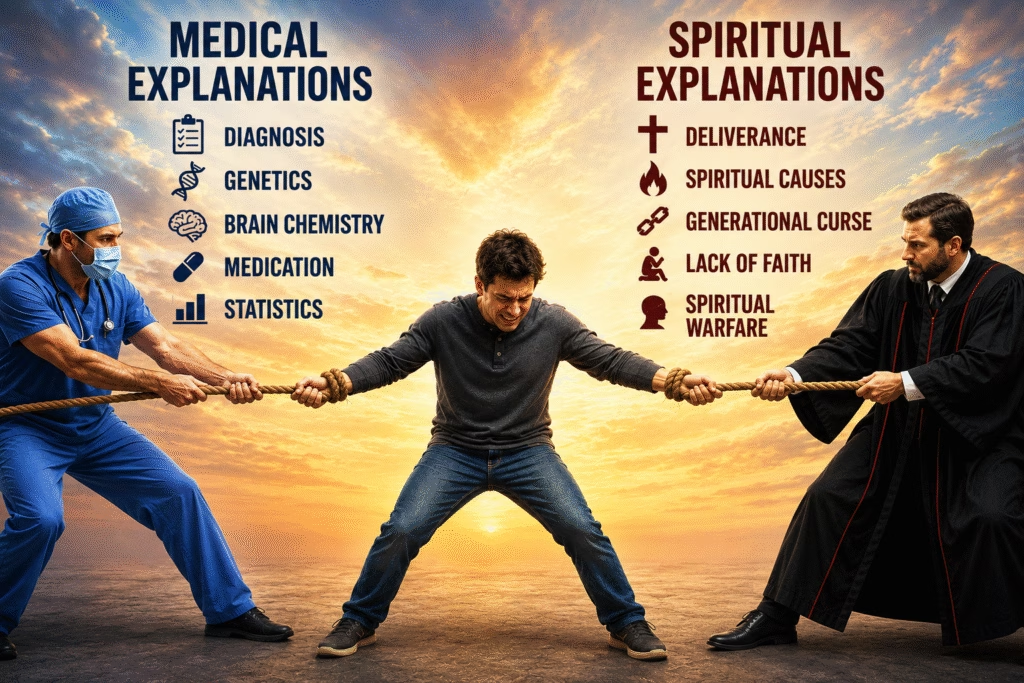
Some Christian parents have been told that their child’s autism or ADHD is caused by a demon.
Many have been told it is the result of a generational curse.
Others have been told they simply do not have enough faith.
Outside the church, autism and ADHD are commonly described as medical conditions, disorders, disabilities, forms of neurodiversity, or the result of genetic, environmental, or medication-related factors before or after birth.
These discussions are no longer limited to medical and educational settings. They are increasingly taking place within churches, Christian families, and ministry contexts as well.
Yet despite these many explanations, many Christians have never been shown a single Bible passage that clearly teaches that autism or ADHD is caused by a demon, a generational curse, or a lack of faith.
Are these beliefs supported by Scripture, or have they simply been repeated for so long that most people no longer question them?
Important Questions Few People Ask
The reality is that many Christians have inherited assumptions about autism, ADHD, and other forms of neurodiversity without ever carefully examining what the Bible does and does not say.
As a result, opinions often differ widely. Some approach autism and ADHD primarily as medical conditions. Others believe the causes and solutions are primarily spiritual. Still others attempt to combine biblical, medical, and psychological explanations.
- Can a neurological condition be caused by a demon?
- Does being different mean something is spiritually wrong?
- Can people with autism or ADHD faithfully serve God, lead others, and fulfil His purpose for their lives?
- But how many of these beliefs are actually based on Scripture?
- What does Scripture actually teach about autism, ADHD, and other forms of neurodiversity?
Why These Questions Matter
- These questions matter because the answers affect real people.
- They affect children who grow up believing they are broken.
- They affect parents searching for answers.
- They affect churches trying to support families.
- They affect adults who have spent years wondering why they experience the world differently from those around them.
Caught Between Two Extremes
The challenge is that discussions about autism and ADHD often become trapped between two extremes.
One extreme attempts to explain everything medically.
The other attempts to explain everything spiritually.
Yet Scripture repeatedly shows that human beings cannot be reduced to simple labels, assumptions, or stereotypes.
A Different Perspective
Christians have been asking the wrong questions.
Some of the answers people have accepted are based more on tradition, opinion, or misunderstanding than on careful biblical study.
A careful study of Scripture reveals a more balanced, compassionate, and thoughtful perspective than many people have been led to believe.
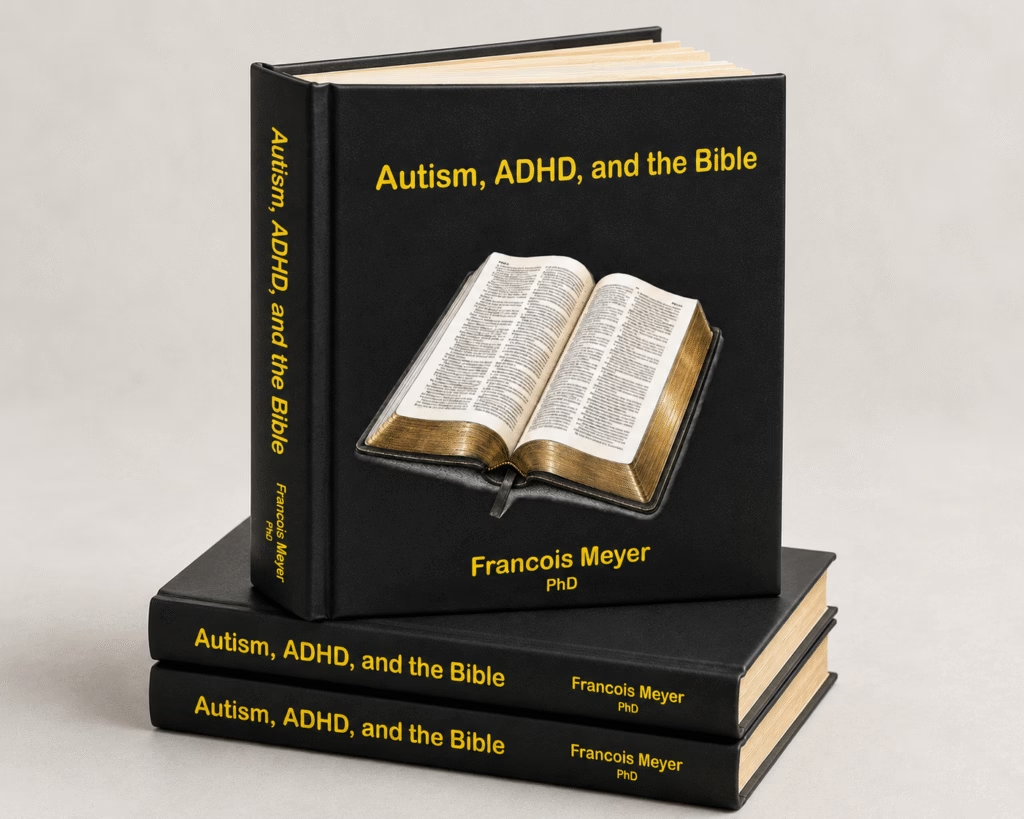
Autism, ADHD, and the Bible: Beyond Labels, Myths, and Assumptions examines these claims, assumptions, and beliefs in light of Scripture.
Rather than promoting popular opinions, the book examines biblical teaching, common church beliefs, scientific understanding, and practical realities. It challenges readers to think carefully, test assumptions, and consider what Scripture actually says.
The Most Important Question
Whether you are a parent, church leader, educator, counsellor, autistic adult, person with ADHD, or simply someone seeking biblical answers, this book may challenge beliefs you have never thought to question.
- The most important question is not, “What does society say?”
- The most important question is not, “What does social media say?”
- The most important question is not, “What do science and psychology say?”
- The most important question is not even, “What does church tradition say?”
The most important question is:
- What does Scripture actually teach?
Autism, ADHD, and the Bible is available now.