Can You Take Communion at Home?
Many believers ask:
“Can we take communion at home as a family?”
The simple answer is: Yes, if it is done according to Scripture. Here is a guide to follow.
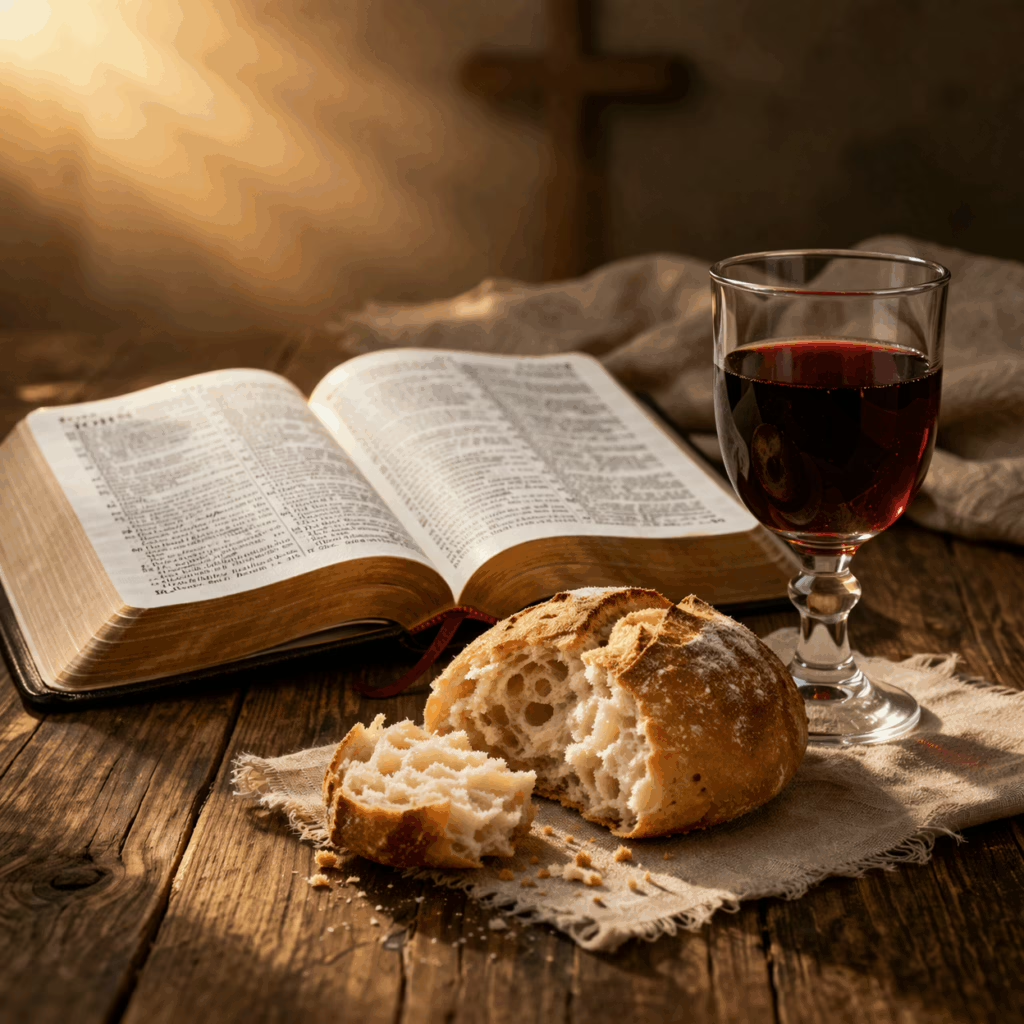
Communion is not limited to a church building.
It is not limited to location.
It is remembering Jesus Christ with a right heart.
This guide will show you, from Scripture, what communion truly is, how to approach it, and how to do it in a simple and meaningful way at home.
What Communion Is According to Scripture
Communion, also called the Lord’s Supper, was given by Jesus as a command to remember Him.
1 Corinthians 11:23–26 (NASB):
23 For I received from the Lord that which I also delivered to you, that the Lord Jesus, on the night when He was betrayed, took bread; 24 and when He had given thanks, He broke it and said, “This is My body, which is for you; do this in remembrance of Me.” 25 In the same way He also took the cup after supper, saying, “This cup is the new covenant in My blood; do this, as often as you drink it, in remembrance of Me.” 26 For as often as you eat this bread and drink the cup, you proclaim the Lord’s death until He comes.
“Do this in remembrance of Me… For as often as you eat this bread and drink this cup, you proclaim the Lord’s death till He comes.”
Communion is:
– A remembrance of Jesus’ sacrifice
– A proclamation of His death
– A spiritual reflection
– A renewal of commitment to God
It is not just a ritual. It is a heart response to truth.
The Serious Warning About Communion
Scripture gives a clear warning:
“Whoever eats… in an unworthy manner… Let a person examine himself…” (1 Corinthians 11:27- 28)
27 Therefore whoever eats the bread or drinks the cup of the Lord in an unworthy way, shall be guilty of the body and the blood of the Lord. 28 But a person must examine himself, and in so doing he is to eat of the bread and drink of the cup. (1 Corinthians 11:27-28 New American Standard Bible (NASB))
This does not mean you must be perfect.
It means:
- Do not come casually
- Do not ignore sin
- Do not treat communion as routine
The issue is not your past, it is your present heart condition.
It means this:
God is not looking at everything you have done in the past as a barrier to communion.
If that were the case, no one could come.
He is looking at your heart right now.
- Are you repentant, or are you holding onto sin?
- Are you honest before Him, or pretending?
- Do you desire to obey, or are you resisting Him?
If we confess our sins, He is faithful and righteous, so that He will forgive us our sins and cleanse us from all unrighteousness. – (1 John 1:9)
“If we confess our sins, He is faithful… to forgive…”
So, the question is not:
“Have I sinned in the past?”
The question is:
“Am I right with God right now?”
What Does “Unworthy Manner” Mean?
“Unworthy” refers to how you come, not whether you have ever sinned.
“How you come” refers to the condition of your heart, whether it is submissive or rebellious. It is your attitude, your honesty before God, and your understanding in that moment.
It is not whether you have sinned,
but whether you come before God with repentance, reverence, and truth.
An unworthy manner includes:
- No repentance
- No reflection
- No understanding
- Treating it like a normal meal
A worthy manner includes:
- Honesty before God
- Repentance
- Reverence
- Awareness of Jesus’ sacrifice
“If we confess our sins, He is faithful… to forgive…” (1 John 1:9)
The Meaning of the Bread and the Cup
The Bread (Body of Christ)
The bread represents:
- Jesus’ body given for us
- His suffering
- The price of sin
“This is My body which is given for you…” (Luke 22:19)
The Cup (Blood of Christ)
The cup represents:
- The new covenant
- Forgiveness of sins
- The sacrifice of Jesus
“This cup is the new covenant in My blood…” (Luke 22:20)
Does the Bread Have to Be Unleavened?
This is a common concern.
In Scripture:
- Unleavened bread was used during Passover
- Leaven often represents sin
📖 1 Corinthians 5:7
“Christ, our Passover, was sacrificed for us. (1 Corinthians 5:7)
However, when teaching communion:
📖 1 Corinthians 11
The focus is not on the type of bread, but on:
- The meaning
- The heart
- The reverence
This means:
Not having unleavened bread does not prevent you from taking communion at home.
The most important thing is:
- Understanding what it represents
- Coming with a repentant heart
In 1 Corinthians 11, Paul addresses order, conduct, and the proper attitude when believers gather.
He begins by teaching about authority and order in worship, showing that God values structure, respect, and honour in how we approach Him.
He then corrects the church for their behaviour when they gather together.
Instead of coming in unity and love, they were:
- Divided
- Selfish
- Treating the gathering like a common meal
Because of this, Paul says:
When you come together, it is not truly the Lord’s Supper you are eating.
The Institution of Communion
Paul then reminds them of what Jesus commanded:
- The bread represents His body given for us
- The cup represents His blood, which is the new covenant
Communion is meant to:
- Remember Christ
- Proclaim His death
- Be done with understanding and reverence
Another Serious Warning
Paul gives a serious warning:
- Taking communion in an unworthy manner brings judgment
- This happens when a person does not examine themselves
- Or does not discern the body of Christ
Some had already faced consequences because they treated it lightly.
In 1 Corinthians 11:29–30, Paul explains that those who take communion without properly recognising its meaning and coming with a repentant and surrendered heart bring judgment on themselves, and that some had become weak, sick, and even died as a result.
It means that Communion must not be treated as a routine or casual act.
It requires:
- Self-examination
- Repentance
- Reverence
- Unity with others
Paul’s Final Instruction
Paul concludes by instructing believers to:
- Wait for one another
- Show consideration
- Keep the gathering focused on its true purpose
When Paul instructs believers to “wait for one another,” he is calling them to come together in unity rather than acting independently or selfishly. This means not rushing ahead to take communion on your own, but ensuring that everyone is present and ready. In Corinth, some were eating before others arrived, even to the point of excess, while others had nothing. This defeated the purpose of gathering as one body. Paul’s instruction is clear: communion is not an individual act, but a shared moment of unity.
To “show consideration” means to think about others and not just yourself. It involves avoiding behaviour that excludes, shames, or elevates one person over another. In the context of Corinth, some were eating abundantly while others were left hungry, and the poor were being humiliated. True consideration reflects equality, respect, and care for others, recognising that all stand equally before God.
Finally, to “keep the gathering focused on its true purpose” means understanding that communion is not a social meal or about satisfying physical hunger. It is about remembering Christ. Paul makes this clear when he says in 1 Corinthians 11:22, “Do you not have houses in which to eat and drink?” In other words, if you are hungry, eat at home. Communion must not be treated casually or reduced to an ordinary meal. It is a sacred act of remembrance.
1 Corinthians 11 teaches that communion is not the outward act, but the condition of the heart, the understanding, and the way we approach God.
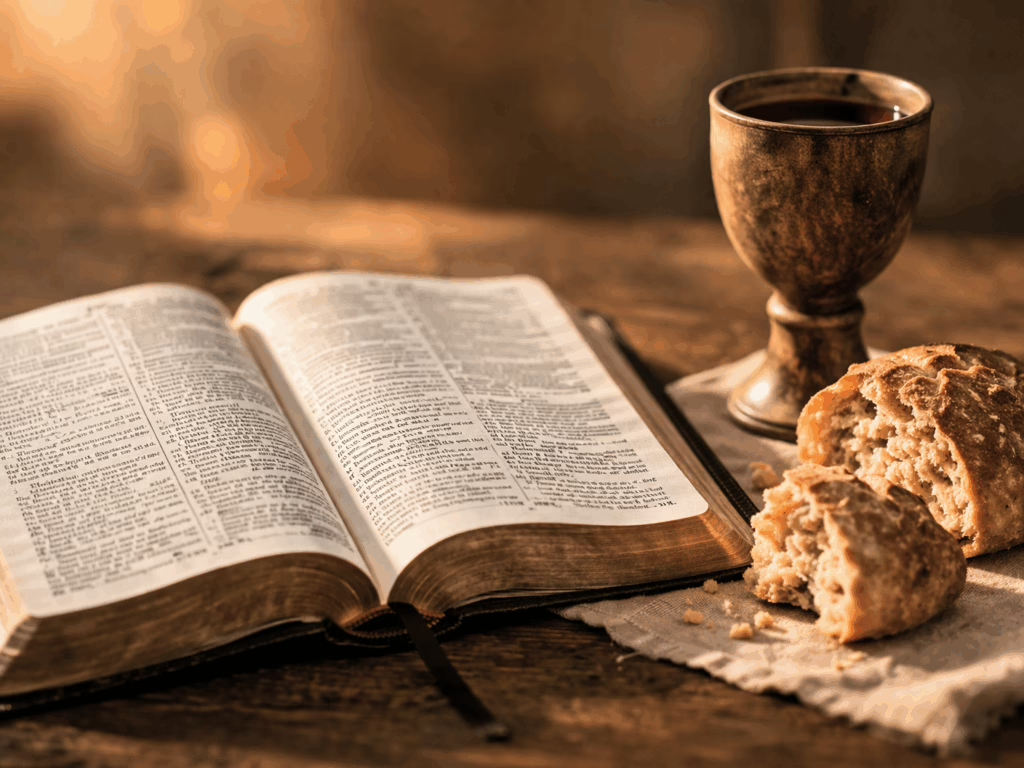
How to Take Communion at Home (Step-by-Step)
1. Examine Your Heart
Ask yourself:
- Is there sin I need to confess?
- Am I holding bitterness?
- Am I living in obedience?
2. Pray and Repent
Example Prayer:
Heavenly Father,
we come before You in humility.
We confess our sins,
in our thoughts, words, and actions.
Please forgive us.
Cleanse our hearts.
Help us to turn away from sin
and live in obedience to Your Word.
In Jesus’ name,
Amen.
3. Take the Bread
Say:
This bread represents the body of Jesus Christ, given for us.
Eat together.
4. Take the Cup
Say:
This cup represents the blood of Jesus Christ, shed for the forgiveness of sins.
Drink together.
5. Reflect and Give Thanks
Take a quiet moment to reflect on:
- The sacrifice of Jesus
- The seriousness of sin
- Your commitment to obey God
Closing Prayer (After Communion)
Heavenly Father,
we praise You for Your truth and Your mercy.
Thank You for the sacrifice of Jesus Christ.
Thank You for forgiveness.
Help us to live in daily obedience,
from the heart, not just outwardly.
Strengthen us to walk in truth
and remain faithful.
In Jesus’ name,
Amen.
Final Thought: What Truly Matters
Communion is not about:
- Perfect bread
- Perfect words
- Perfect people
It is about:
Coming honestly before God without hiding sin, remembering Christ and His sacrifice, and choosing to live in obedience to Him.
Conclusion
Yes, you can take communion at home.
But more importantly:
You must take it with understanding, repentance, and reverence.
That is what Scripture teaches.
2-Minute Unleavened Communion Bread Recipe
Here is a very simple, quick unleavened bread recipe you can use for communion. No yeast, no raising agents, just like the Biblical pattern.
🍞 2-Minute Unleavened Communion Bread
Ingredients
- 1 cup flour
- ¼ cup water
- Pinch of salt (optional)
Method (Quick)
- Mix flour, water, and salt in a bowl
- Knead lightly for about 30–60 seconds
- Flatten into a thin round (like a wrap)
- Cook in a dry pan on medium heat
- About 1 minute per side
- Until lightly browned spots appear
Result
- Thin, simple bread
- No rising
- No leaven
This is very similar to what would have been used during Passover
Optional (for Communion Use)
Before cooking, you can:
- Pierce it lightly with a fork (symbolic of affliction)
- Break it after cooking (as Jesus broke the bread)
📖 Luke 22:19
“He took bread, gave thanks and broke it…”

Written by Francois Meyer (DTh, DDiv, PhD)
Join the live Sunday sermons on YouTube for Scripture-focused teaching in a quiet, pressure-free environment.
You can view the Live Bible Teaching on Sundays
Join us every Sunday for in-depth Bible teaching.
🔔 Subscribe and turn on notifications.
🕘 Live at 09:30 (South Africa time)
🌍 Check your local time here
Spend some time on the website for more topics, studies, and blogs.
🌐 https://preacherstudies.com