
Is blowing/breathing the Holy Spirit in church a biblical act? Can someone release the Holy Spirit by blowing, according to the Bible? This is a very sensitive topic in Christianity, and definitely deserves serious attention.
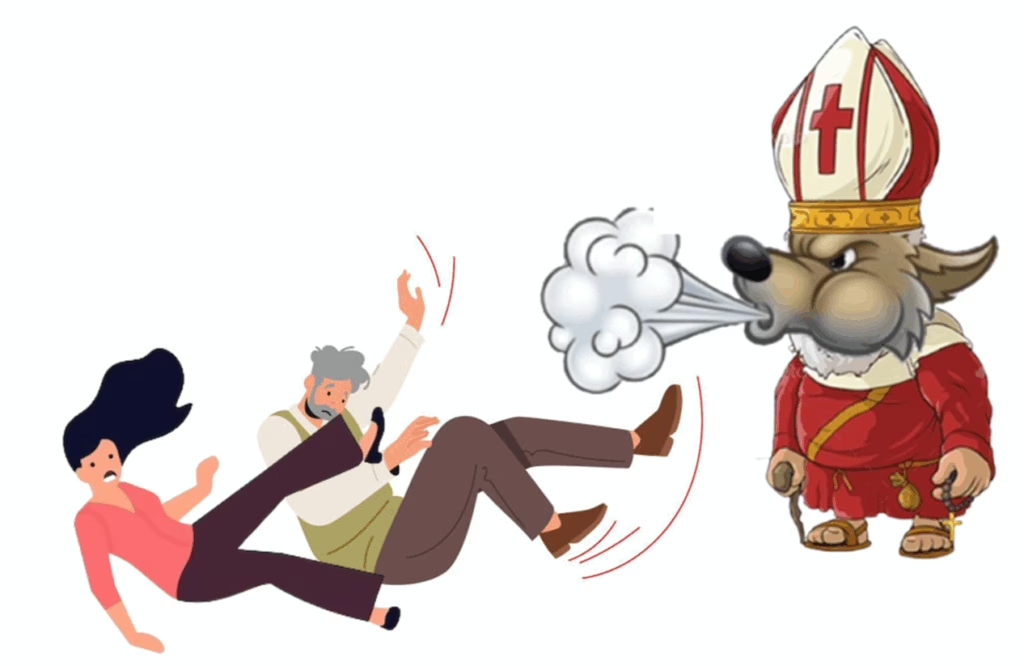
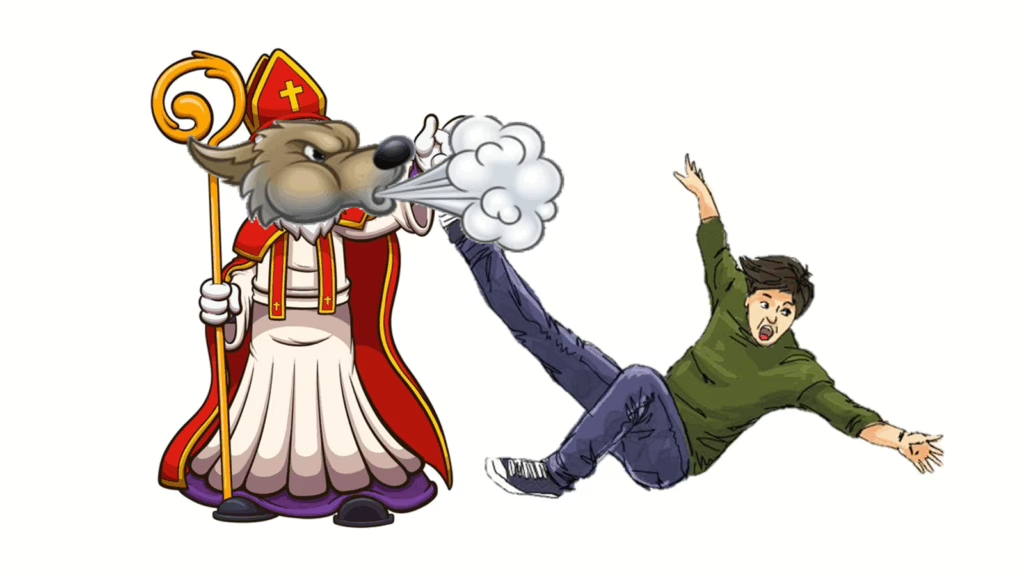
In many modern charismatic churches, it has become common for preachers to “blow” or “breathe” on people, claiming to impart the Holy Spirit. It is often followed by individuals, and even entire crowds, falling backward, shaking, or lying motionless. Some call this a move of God. But is it really?
If you have not read yesterday’s blog on the unbiblical practice of being “slain in the Spirit,” you can read it here: Is being slain in the Spirit biblical?
Is blowing the Holy Spirit in church biblical?
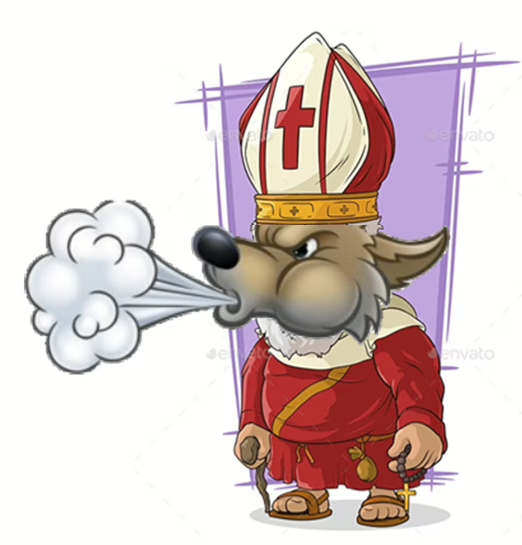
- Is it biblical for preachers to blow the Holy Spirit on people?
- Can a pastor blow the Holy Spirit on someone?
- What does the Bible say about blowing the Holy Spirit?
The Bible gives no support for this practice. It is not only unbiblical, it is blasphemy. Jesus alone, as God in the flesh, breathed the Spirit once in John 20:22. No apostle or believer ever repeated it. When men today imitate this sacred act, they place themselves in God’s position, mocking the holiness of the Spirit and misleading His people. In this post, we will expose this deception through Scripture and call the church back to reverent truth.
Blowing the Holy Spirit: What They Claim Is Happening
Many preachers in charismatic and Pentecostal settings claim that when they blow or wave their hand, the Holy Spirit is being transferred or released. They believe this is a sign of God’s anointing and power, often pointing to the dramatic reactions of people falling over, shaking, or weeping. These moments are marketed as manifestations of God’s presence.
These are False Signs and Manipulation
- These acts are often seen in emotional mass gatherings, often involving:
- Shouting or chanting,
- Dramatic music,
- “Catchers” for falling people,
- People writhing, laughing uncontrollably, or convulsing.
- But nowhere in the Bible do such manifestations happen when God’s Spirit truly fills someone.
But we must ask: is this how the Holy Spirit operates in Scripture?
What Jesus Actually Did in John 20:22
“And when He had said this, He breathed on them and said to them, ‘Receive the Holy Spirit.’”
— John 20:22 (ESV)
This is the only place in the entire Bible where someone breathes on others in connection with the Holy Spirit, and it was Jesus, not a man. He was God in the flesh, doing this as a prophetic act just before Pentecost. This was not a repeatable method, nor is it ever commanded. No apostle or disciple ever tried to mimic this moment.
So, to imitate it today is to step into the place of God, which is not only prideful and dangerous, It Is Blasphemy!
After His resurrection, Jesus breathed on His disciples in John 20:22, saying, “Receive the Holy Spirit.” This occurred on Resurrection Sunday, not at Pentecost. That moment was symbolic and prophetic, pointing forward to the true outpouring of the Spirit, which would come about 50 days later.
Only Jesus Ever Breathed the Holy Spirit — as God
John 20:22 – “And when He had said this, He breathed on them and said to them, ‘Receive the Holy Spirit.’”
- Jesus, being God Himself, breathed on the disciples once, in a unique event before Pentecost.
Is blowing the Holy Spirit in church biblical?
- No prophet or apostle ever repeated this.
- For a human preacher today to imitate this act is to place themselves in God’s position, which is blasphemous.
❗ No apostle ever blew on someone. They laid hands, they preached, they prayed, but they never pretended to give the Holy Spirit by breath or force.
The Holy Spirit is God, not a Force to Control
- The Spirit goes where He wills (John 3:8), not where a man commands.
- To act as if you can direct the Spirit with your breath or hand reduces the Holy Spirit to a tool or a power source, not a Person of the Godhead.
- That is not just false teaching, it is spiritual abuse.
Day of Pentecost and tongues of fire
The actual fulfillment took place in Acts 2, on the Day of Pentecost, when the Holy Spirit descended with a sound like rushing wind and tongues of fire that rested on each of the 120 believers in the upper room, not just the twelve apostles. This marked the beginning of the new covenant, where the Spirit would now indwell all who believe.
The apostles did not receive a special or earlier outpouring. The entire group of believers, men and women, young and old, received the Holy Spirit together. This fulfilled Joel’s prophecy: “I will pour out My Spirit on all flesh.” (Acts 2:17). Later that same day, 3,000 more were added to the church through repentance and baptism, also receiving the gift of the Spirit (Acts 2:38).
The Apostles Never Repeated It
After Pentecost, the apostles:
- Laid hands on people (Acts 8:17; 19:6),
- Preached the Word, and
- Prayed for believers to receive the Holy Spirit.
But never once did they blow, breathe, or theatrically wave their hands to cause spiritual effects. This is telling. If the apostles, filled with the Spirit and commissioned directly by Jesus, never used such methods, why do modern preachers do so?
Because it is not biblical!
It is manipulative, sensational, attention-seeking, performance-driven, emotional, theatrical, dramatic, and man-made.
This is not a move of God! It is a counterfeit work of the enemy. This is motional, man-made, and manipulative. It deceives many under the appearance of holiness, just as Satan disguises himself as an angel of light. (2 Corinthians 11:14)
Why This Practice Misrepresents the Holy Spirit
Blowing the Spirit like a force:
- Treats the Holy Spirit as an energy, not a divine Person.
- Suggests man has control over God, which is heretical.
- Draws attention to the preacher, not to Christ.
These preachers often say, “Receive it!” or “Touch!” as they blow or wave their hands, making it seem like they are the source of the Spirit.
That is not just dangerously close, it is a direct claim to control God’s power, which is the same as claiming to control God Himself. Just like Simon the sorcerer in Acts 8:18–20, they seek to possess and distribute the Holy Spirit at will, turning the sacred into a show and treating the presence of God as if it were under human command. This is not ministry. It is blasphemy.
Peter said to Simon:
“Your heart is not right before God… Repent… You have no part in this ministry.” This is not humility. It is showmanship. It misleads sincere people into believing that they are experiencing God, when they may only be reacting to emotional suggestion or psychological manipulation.
Warnings About False Manifestations
Jesus warned:
“For false christs and false prophets will arise and perform great signs and wonders, so as to lead astray, if possible, even the elect.”
— Matthew 24:24
Paul warned:
“The coming of the lawless one is by the activity of Satan with all power and false signs and wonders…”
— 2 Thessalonians 2:9
Not everything that looks supernatural is from God. And the Holy Spirit is never chaotic, uncontrollable, or theatrical. In fact, one of the fruits of the Spirit is self-control (Galatians 5:23), not falling, shaking, or losing consciousness.
Can Satan Enter the Church? Yes! And He Often Does
Many Christians wrongly believe that Satan and demons cannot interfere with church services or enter a church building. But Scripture tells a different story. The Bible warns us that many preachers, prophets, and even apostles who appear holy, will be false. They will be self-proclaimed and deceiving many (Matthew 24:11, 2 Corinthians 11:13). Just because someone stands in a pulpit or uses the name of Jesus does not mean they are from God.
“And no wonder, for Satan himself masquerades as an angel of light.”
— 2 Corinthians 11:14
Even demons know who Jesus is (James 2:19, Mark 1:24), and they can say His name. A preacher using the name “Jesus” means nothing if the message they preach is false or leads people away from truth and obedience. This deception is why Jesus said:
“Many will say to Me in that day, ‘Lord, Lord…’ and I will declare to them, ‘I never knew you. Depart from Me, you who practice lawlessness!’”
— Matthew 7:22–23
The enemy is not afraid to enter churches. In fact, he often prefers it, because it is there that he can appear righteous while leading many astray.
Is blowing the Holy Spirit in church biblical?
Today, you have seen the truth.
So, now… what will you do with it?
Will you continue to follow what is popular or what is biblical?
Will you test every spirit (1 John 4:1), or will you believe the one who performs the most signs?
Are you willing to repent before God if you have been involved in these false practices, or harden your heart?
God will not be mocked!
“Do not be deceived: God is not mocked, for whatever one sows, that will he also reap.”
[Galatians 6:7 (ESV)]
This verse is a direct warning that people cannot treat God lightly or twist His truth without consequence
God’s Spirit is holy. He is not a force to be thrown around.
Fear God, not man. Obey Scripture, not sensation.
May God bless you with a teachable spirit and a heart that passionately seeks the truth. – Dr. Francois Meyer –
Maybe you wondered:
- Is it right for preachers to blow on people?
- Did Jesus or the apostles blow the Holy Spirit on people?
- Can man impart the Holy Spirit by blowing?
- Does the Bible support blowing the Holy Spirit onto someone?
Now you know…