
Many modern churches, especially in charismatic and Pentecostal circles, claim that being “slain in the Spirit” (falling to the ground when prayed for or touched) is a move of the Holy Spirit. But is this practice truly biblical, or is it rooted in emotionalism and misinterpretation? In this post, we will examine what the Bible actually says (and does not say) about falling under the power and whether “being slain in the Spirit” is supported by Scripture at all.
- Is being slain in the Spirit biblical?
- Is slain in the Spirit in the Bible?
- What does the Bible say about being slain in the Spirit?
- Is falling under the power of the Holy Spirit biblical?
- Is it biblical to fall when touched by a preacher?
- Where in the Bible does it say people were slain in the Spirit?
- Does the Bible support being slain in the Spirit?

2 Timothy 1:7 (KJV)
“For God hath not given us the spirit of fear; but of power, and of love, and of a sound mind.”
Meaning of the Verse:
- “God hath not given us the spirit of fear”:
Fear here refers to timidity, cowardice, or anxiety. Paul is reminding Timothy (and all believers) that fear does not come from God. - “But of power”:
The Holy Spirit gives us strength and boldness to do God’s will, even in difficult or hostile circumstances. - “And of love”:
God’s Spirit enables believers to act in genuine love — not self-preservation or fear of man. - “And of a sound mind”:
This implies self-control, discernment, and a disciplined, stable thought life, not confusion or panic.
Is ‘slain in the spirit’ Biblical?
2 Timothy 1:7 is only one of few passages from the Bible providing a strong argument against the idea of being “slain in the Spirit”, especially in the way it is practiced in some charismatic circles, but it is not the only verse that applies.
Let’s break it down:
Why “Slain in the Spirit” Is Inconsistent with 2 Timothy 1:7:
“For God has not given us a spirit of fear, but of power, of love, and of a sound mind.” (2 Timothy 1:7)
- “Power” – The Holy Spirit empowers the believer for service and endurance, not for losing control or consciousness.
- “Love” – Love is relational and active, not chaotic or emotionally overwhelming to the point of collapsing.
- “Sound mind” (Greek: sōphronismos) – This literally means self-discipline, self-control, or rational thinking.
When people fall backwards, unconscious or overwhelmed during so-called spiritual experiences, they are not exhibiting self-control or sound judgment, which directly contradicts this verse.
So, 2 Timothy 1:7 tells us that the Holy Spirit leads to sober, clear-minded, purposeful behavior, not emotional chaos or physical collapse.
🛡️ What About Gideon?
Gideon is a great example of how God’s Spirit empowers someone, but again, not by “slaying” them.
- Judges 6:34 (KJV):
“But the Spirit of the LORD came upon Gideon, and he blew a trumpet…”
(Literally: “the Spirit clothed Gideon” in Hebrew – gave him boldness and leadership.)
He did not fall down or lose control. Instead, he acted boldly, purposefully, and with clarity.
Consistency in Scripture:
Throughout the Bible, when the Holy Spirit comes upon people:
- They prophesy (Acts 2), (see Note 1 below)
- They speak boldly (Acts 4:31),
- They have visions or understanding (Daniel, Ezekiel), (See note 2 below)
- They preach or serve with conviction (Stephen in Acts 7),
Note 1: Prophesying in the Bible does not mean giving people personal messages about their future or “reading their mail,” as is often seen in modern charismatic movements. In Scripture, a true prophet is someone who boldly rebukes sin, calls the people of God to repentance, and calls the church back to obedience to God’s Word. This kind of prophecy is deeply unpopular because it confronts human pride, sin, and rebellion. That is why true prophets were often hated, persecuted, or rejected, both in biblical times and still are hated today, while self-proclaimed prophets who say what people want to hear are endorsed and celebrated by the masses.
Note 2: Likewise, the phrase “visions or understanding” in Scripture refers to God-given insight into His already revealed Word, not new personal revelations. These are not mystical dreams or secret knowledge, but clarity, discernment, and spiritual understanding of what God has already said. True spiritual visions never contradict Scripture and never replace it; they only illuminate what God has already spoken.
2 Timothy 1:7 clearly supports the idea that the Spirit of God leads to power, love, and a sound mind, not chaotic or unconscious behavior.
Gideon’s example shows the Spirit empowers for action, not emotional spectacle.
Both of these examples refute the modern unbiblical practice of being “slain in the Spirit.”
More examples
1. The Day of Pentecost
- Acts 2:1–4 The Day of Pentecost
“And they were all filled with the Holy Spirit and began to speak in other tongues, as the Spirit gave them utterance.”
What Actually Happened:
The disciples did not fall down, lose control, or shake violently.
They spoke boldly in known human languages, not in unidentifiable sounds no one could understand.
Those watching were amazed and confused, not because of chaos, but because they heard clear, coherent words in their own native tongues (languages) (Acts 2:6–11).
Peter then stood up and preached with power and clarity (Acts 2:14).
Misuse:
Charismatic movements sometimes point to this event in Acts 2 to justify emotional experiences. But nothing about this scene shows loss of control or being “slain in the spirit.” The Holy Spirit filled them for witness and proclamation, not for emotional drama.
2. They fell to the ground
John 18:6 — “They fell to the ground”
“As soon then as he had said unto them, I am he, they went backward, and fell to the ground.”
What Actually Happened:
This was not believers being touched by the Holy Spirit, but Roman soldiers and officers coming to arrest Jesus.
When Jesus said, “I AM” (ἐγώ εἰμι – Greek translation of the divine name), His authority caused His enemies to fall back.
What it Literally Means:
- ἐγώ (egō) = “I”
- εἰμι (eimi) = “am”
- Together: “I am”
This phrase is extremely significant in the Bible. Especially in John 18:6, when Jesus said:
“I am he.”
(Greek: ἐγώ εἰμι)
But in Greek, Jesus does not say “I am he”. He simply says “I AM” , which echoes God’s name in the Old Testament. When Jesus said, “I AM” (ἐγώ εἰμι – the divine name), His authority caused His enemies to fall back.
This was a moment of divine revelation and judgment, not blessing or anointing.
Nowhere does the Bible say they were “slain in the Spirit”.
Misuse:
Some claim this supports falling under God’s power. But in context, this fall was a reaction of unbelievers to God’s divine authority, not a spiritual blessing or a model for Christian behavior.
3. King Saul prophesied
1 Samuel 19:23–24 (NKJV) Saul lies down naked and prophesies
23 So he went there to Naioth in Ramah. Then the Spirit of God was upon him also, and he went on and prophesied until he came to Naioth in Ramah. 24 And he also stripped off his clothes and prophesied before Samuel in like manner, and lay down naked all that day and all that night. Therefore they say, “Is Saul also among the prophets?”
What Actually Happened:
This was King Saul, an unrepentant man already rejected by God (1 Sam. 15:26–28). This episode was God intervening to stop him from harming David, not a blessing. Saul was publicly humiliated by being made to lie down prophesying.
It was a judgment, not a revival meeting.
Again, this was not a pattern for Christian behavior.
4. Falling in their face
Ezekiel and Daniel — Falling on their face
Examples:
- Ezekiel 1:28: “I fell on my face”
- Daniel 8:17–18: “I was afraid and fell upon my face”
What Actually Happened:
- These were prophets seeing divine visions of God or angels. Not during worship services.
- They fell out of reverence and awe, not from being “slain in the Spirit.”
- In nearly every case, they were then told to stand up (e.g., Ezekiel 2:1–2: “Son of man, stand upon thy feet, and I will speak to thee.”)
The Spirit of God restores people to clarity, not disables them.
5. The Fruit of the Spirit
5. Galatians 5:22–23 — The Fruit of the Spirit
“…love, joy, peace, patience, kindness, goodness, faithfulness, gentleness, self-control…”
What this teaches:
- Self-control is listed as a fruit of the Holy Spirit.
- Any behavior that causes someone to lose bodily control or awareness contradicts the very nature of the Spirit’s work.
What Does the Holy Spirit Really Do?
| False Experience (Slain in the Spirit) | True Experience (Biblical) |
|---|---|
| Loss of control, unconsciousness | Empowered action, clarity |
| Backward falling, chaos | Reverent fear or bold speech |
| Emotional outbursts, shaking | Self-control, sound mind |
| Random behavior | Orderly, Spirit-led living |
Nowhere in Scripture do believers “fall backwards” under God’s Spirit as a sign of blessing. Falling down was often a sign of:
- Reverence, Worship, Awe, Adoration, Fear of the Lord (falling face-forward),
- Terror or conviction (especially in unbelievers),
- Or a result of God’s judgment or sovereign action.
The Holy Spirit does not create chaos or emotional confusion.
The Holy Spirit brings:
- Conviction (John 16:8),
- Empowerment for witness (Acts 1:8),
- Understanding of Scripture (John 14:26),
- Guidance into truth (John 16:13),
- And the fruit of holiness and self-control (Gal. 5:22–23).
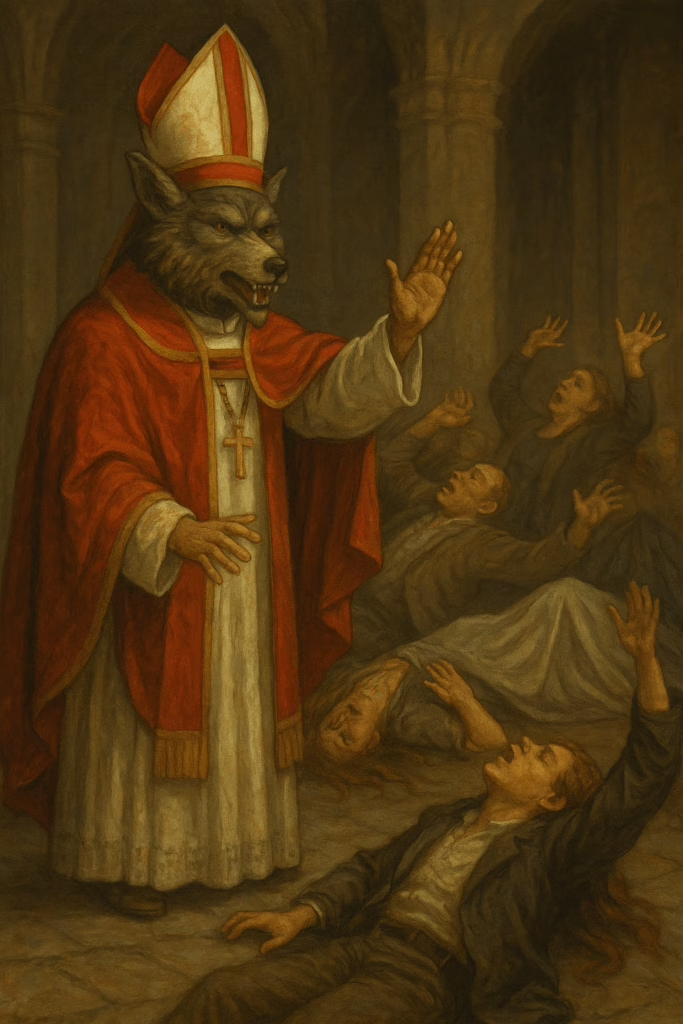
Is ‘Slain in the spirit’ biblical today?
Today, many people, especially in charismatic and Pentecostal circles, believe that being “slain in the Spirit” (sometimes called “falling under the power”) is a supernatural experience in which a person:
- Falls backward (or occasionally forward),
- Becomes unconscious or semi-conscious,
- May tremble, cry, laugh, or lie still for minutes or even hours.
This is usually said to happen when a preacher or leader lays hands on them, prays, waves their hand toward them, or even blows upon them.
What They Believe Is Happening:
People who believe in being “slain in the Spirit” commonly claim:
- The Holy Spirit is overwhelming them with His presence or power.
- It is a sign of blessing, healing, deliverance, or infilling of the Spirit.
- It represents falling under the anointing of God or being spiritually refreshed.
- Some say the person is being “touched” or “knocked down” by God’s power for a special work.
What They Often Say:
- “The power of God was too strong for the body to handle.”
- “I could not stand in His presence.”
- “The Spirit overtook me.”
- “God was doing something in me while I was lying there.”
Common Practices Today:
- Preachers will push or wave their hands, often theatrically.
- People line up to be prayed over and fall down one after another.
- Catchers are placed behind them to ensure they fall safely.
- Sometimes accompanied by music, chanting, or emotionally charged atmosphere.
Problems with This Belief:
- No clear biblical precedent – as covered earlier, no one in Scripture fell backward from the Spirit as a sign of blessing.
- Emotionally driven – often happens in settings with music, suggestive language, and group pressure.
- Imitation – many people may fall because they think they should, not because of any real spiritual experience.
- Manipulation – in some cases, people are pushed or pressured by the preacher or the group.
- Lack of fruit – many who experience this report no real lasting change, repentance, or deeper walk with God.
Why Do So Many Still Believe It?
- Ignorance of Scripture – they haven’t compared the experience to biblical patterns.
- Desire for signs and feelings – many seek supernatural experiences over spiritual obedience.
- Peer pressure and groupthink – if everyone else is falling, they assume it’s from God.
- Emotional need – they associate the dramatic moment with God doing something, even if nothing changes afterward.
- Trust in the preacher – they believe the leader is anointed, so the experience must be from God.
What the Bible Emphasizes Instead:
- Repentance, obedience, and love for truth (2 Thess. 2:10–12)
- Sound mind and self-control (2 Tim. 1:7)
- Discerning false signs (Matthew 24:24; 2 Thess. 2:9)
- Walking in the Spirit by producing fruit (Galatians 5:22–23)
- Building others up in truth and order (1 Cor. 14:33, 40)
NOW YOU HAVE HEARD THE TRUTH.
The question is: What are you going to do now?
- Will you continue to follow practices that have no foundation in Scripture, just because they are popular or emotionally stirring?
- Will you test what you have seen and believed against the Word of God?
- Will you love the truth more than signs, emotions, or the approval of man?
- Will you repent if you have been part of a movement that misrepresents the Holy Spirit?
- Or will you harden your heart and reject correction, just like so many did when God sent true prophets to warn them?
The choice is yours, but the truth remains the same.
God is not mocked. His Spirit is holy. His Word is final.
May God bless you with a teachable spirit and a heart that passionately seeks the truth. – Dr. Francois Meyer –
Baie dankie Francois. Dit was nou uiters insiggewend. Ek het al gevra dat ek gedoop, gevul en geklee word met die Heilige Gees maar ek het geen emosionele of omval ervaring gehad nie. Ek het net GOD se Woord gehad Mat 7:7 waar daar geskryf staan “Vra en vir jou sal gegee word”