
Understanding “Fortune-Cookie Faith” and Spiritual Manipulation Online
Is God Speaking Through Social Media? Many Christians today encounter short, comforting religious messages on social media that claim divine authority, leading many to ask whether God is speaking through social media itself. Phrases like “God led you to read this,” “If it is God’s will, nothing can stop it,” or “Type Amen to defeat Satan” are shared thousands of times every day.
These posts feel encouraging. They feel peaceful. They feel spiritual.
Many ask: “Is God Speaking Through Social Media?”

But an important question must be asked:
Is this how God actually speaks, or has faith been reduced to something shallow and emotionally driven?
This article explores a growing phenomenon I call fortune-cookie faith and why discernment matters more now than ever.
What Is Fortune-Cookie Faith?
Fortune-cookie faith is a form of religious messaging that:
- Uses vague spiritual promises
- Avoids repentance, obedience, and accountability
- Claims divine direction without biblical grounding
- Prioritises emotional comfort over spiritual transformation
Like a fortune cookie, it offers something pleasant and generic that can apply to anyone, but it requires nothing from the reader in response.
It is not openly heretical.
It is far more subtle than that.
“God Led You to Read This”: Why That Phrase Is Problematic
When a post declares that God personally led the reader to it, it quietly assumes prophetic authority.
This creates an unspoken pressure:
- If you accept the message, you are obedient.
- If you question it, you are resisting God.
Is God Speaking Through Social Media? Scripture never teaches that God communicates His will through anonymous, untested, algorithm-driven messages. God leads through His already revealed written Word, through conviction, through wisdom, and through accountability within the body of believers.
Claiming divine authority without responsibility is not biblical encouragement.
It is spiritual presumption.
The Misuse of Scripture: Proverbs Taken Out of Context
A commonly cited verse is Proverbs 19:21:
“Many are the plans in a person’s heart, but it is the Lord’s purpose that prevails.”
This verse is often used to suggest that believers should simply relax and wait while God fixes everything.
But the book of Proverbs teaches the opposite:
- Wisdom requires action.
- Choices have consequences.
- Discipline is necessary.
- Obedience matters.
Using Proverbs to promote passivity strips the verse of its context and meaning. God’s sovereignty does not cancel human responsibility. It establishes it.
When “Be Patient” Becomes a Substitute for Repentance
Biblical patience is active, not passive.
Throughout Scripture, God works through:
- Repentance
- Correction
- Obedience
- Growth through discipline
Fortune-cookie faith removes these elements and replaces them with emotional reassurance.
Instead of asking:
- What must I repent of?
- What is God correcting?
- What obedience is required?
The reader is told:
- Do not think too much.
- Let go.
- God will fix it.
This produces delay, not transformation.
“Do Not Overthink” vs. Biblical Discernment
The Bible repeatedly commands believers to examine themselves, test teachings, judge righteously, and bring every thought captive.
Discernment requires thinking.
Is God Speaking Through Social Media? When religious messages discourage reflection, questioning, or examination, they do not protect peace. They suppress conviction.
True peace comes from alignment with truth, not avoidance of it.
Turning Spiritual Warfare Into Superstition
Phrases like “Type Amen to disappoint Satan” reduce faith to a digital ritual.
Resisting the devil, according to Scripture, involves:
- Submission to God
- Truth
- Obedience
- Repentance
- Discernment of thoughts
- Comparing every word spoken by man as a claim to prophecy or word from God, to Scripture itself, without biased opinion.
Typing a word in a comment section does none of these things.
This turns serious spiritual realities into symbolic gestures designed for engagement rather than growth.
Why These Posts Spread So Easily
Fortune-cookie faith is popular because it:
- Requires no repentance
- Demands no obedience
- Offers reassurance without change
- Feels loving without being corrective
It comforts the flesh while leaving the heart untouched.
That is precisely why it spreads so rapidly.
Why Discernment Often Feels Like Anger
When someone recognises this pattern, the response is often frustration or anger. This is not necessarily emotional immaturity.
Jesus Himself reacted strongly when God’s name was used to mislead, pacify, or remove accountability.
Anger, when rooted in discernment rather than ego, is often the first sign that truth has been compromised.
What Biblical Encouragement Actually Looks Like
True biblical encouragement:
- Calls people toward obedience
- Strengthens responsibility
- Produces repentance and growth
- Leads to transformation, not sedation
It does not merely soothe anxiety.
It restores alignment with God.
A Call for Discernment in the Digital Church
Not every message that mentions God speaks for Him.
Not every comforting post is biblical.
And not every viral verse is being used honestly.
Believers are called to love truth more than reassurance and faithfulness more than comfort.
In an age of spiritual noise, discernment is no longer optional.
It is obedience.
This article intentionally addresses common search questions such as:
- “Is God speaking through social media?”
- “How does God speak today?”
- “Are viral Christian posts biblical?”
- “False encouragement in Christianity”
- “Spiritual manipulation online”
A More Complete Biblical Framework for Resisting the Devil
When Scripture speaks about resisting the devil, it does not describe a single act. It describes a process of the mind, heart, and will.
1. Discernment of Thoughts (The First Battleground)
Before obedience or repentance can even occur, a believer must recognise what is happening internally.
Scripture teaches that temptation begins in the mind:
- Thoughts must be examined
- Motives must be tested
- Impressions must be discerned
If a person cannot distinguish between:
- Conviction vs. comfort
- Truth vs. emotional reassurance
- God’s voice vs. human assertion
Then resistance is impossible.
This is why Scripture emphasises sober-mindedness and vigilance.
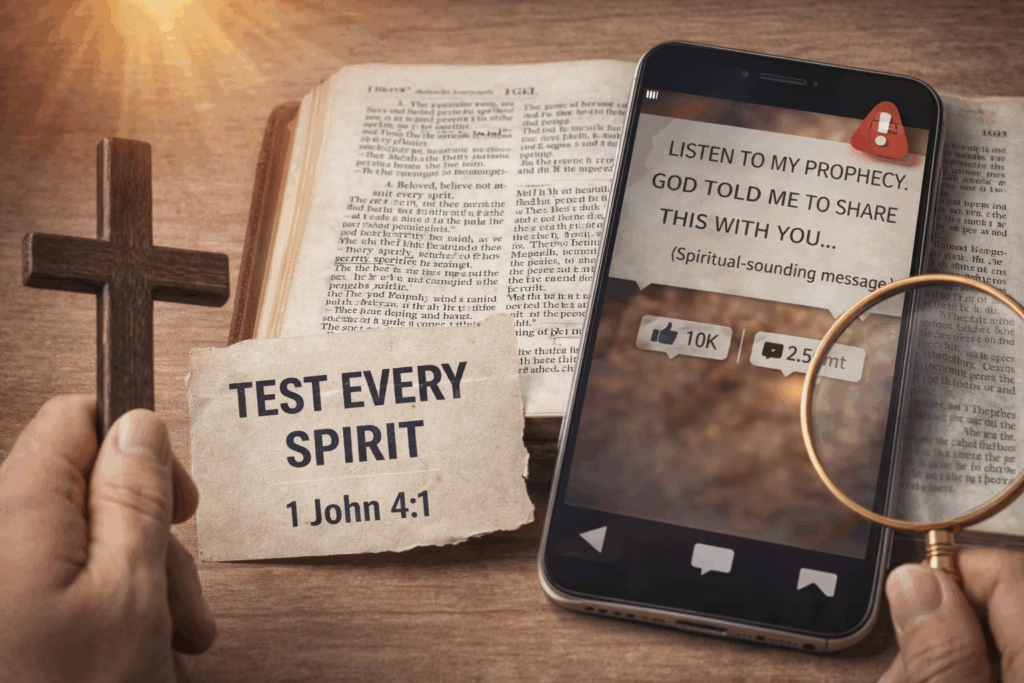
2. Testing Claims Against Written Scripture (Context Matters)
Any claim of divine direction must be measured against what God has already spoken in His written Word.
Biblical faith does not treat Scripture as optional background material.
It treats it as the final authority.
This includes:
- Reading verses in context
- Comparing claims with the whole counsel of God, not taking single verses out of context
- Rejecting interpretations that contradict the character of God
This directly exposes fortune-cookie faith, because such messages:
- Quote Scripture selectively
- Remove correction and accountability
- Use verses to soothe rather than align
Scripture interprets experience, not the other way around.
3. Submission to God (Alignment of Will)
Only after discernment and testing comes submission.
Submission is not passive surrender. It is intentional alignment:
- Choosing God’s truth over emotional relief
- Accepting correction
- Yielding personal desire to God’s will
Without discernment, submission becomes blind obedience to human voices.
4. Truth (Internal Agreement with Reality)
Truth is not merely information. It is agreement with God.
This includes:
- Acknowledging sin
- Rejecting deception
- Accepting uncomfortable correction
Truth often disrupts false peace before it restores real peace.
5. Repentance (Change of Direction)
Once truth is accepted, repentance becomes possible.
Repentance is not emotional regret. It is:
- A turning of the mind
- A reorientation of direction
- A decision to act differently
No repentance occurs without prior discernment.
6. Obedience (Lived Resistance)
Obedience is the visible expression of resistance.
This is where the devil actually loses ground:
- Not through words
- Not through gestures
- But through sustained obedience aligned with truth
Obedience is not perfection. It is faithfulness.
Why Modern Christianity Often Stops Too Early
Many modern teachings begin at:
- “Trust God”
- “Let go”
- “Just pray”
But they skip:
- Thought discernment
- Scriptural testing
- Honest self-examination
As a result, people believe they are resisting the devil while they are actually avoiding discernment.
This Matters because it restores biblical order.
Without discernment and scriptural testing:
- Submission becomes gullibility
- Peace becomes avoidance
- Faith becomes emotional dependence
With discernment:
- Faith becomes anchored
- Peace becomes resilient
- Obedience becomes informed
Get more in-depth study of the truth of God’s Word here

Author: Dr Francois Meyer (DTh, DDiv, PhD)
Comments are intentionally closed to preserve focus on Scripture and personal reflection.